
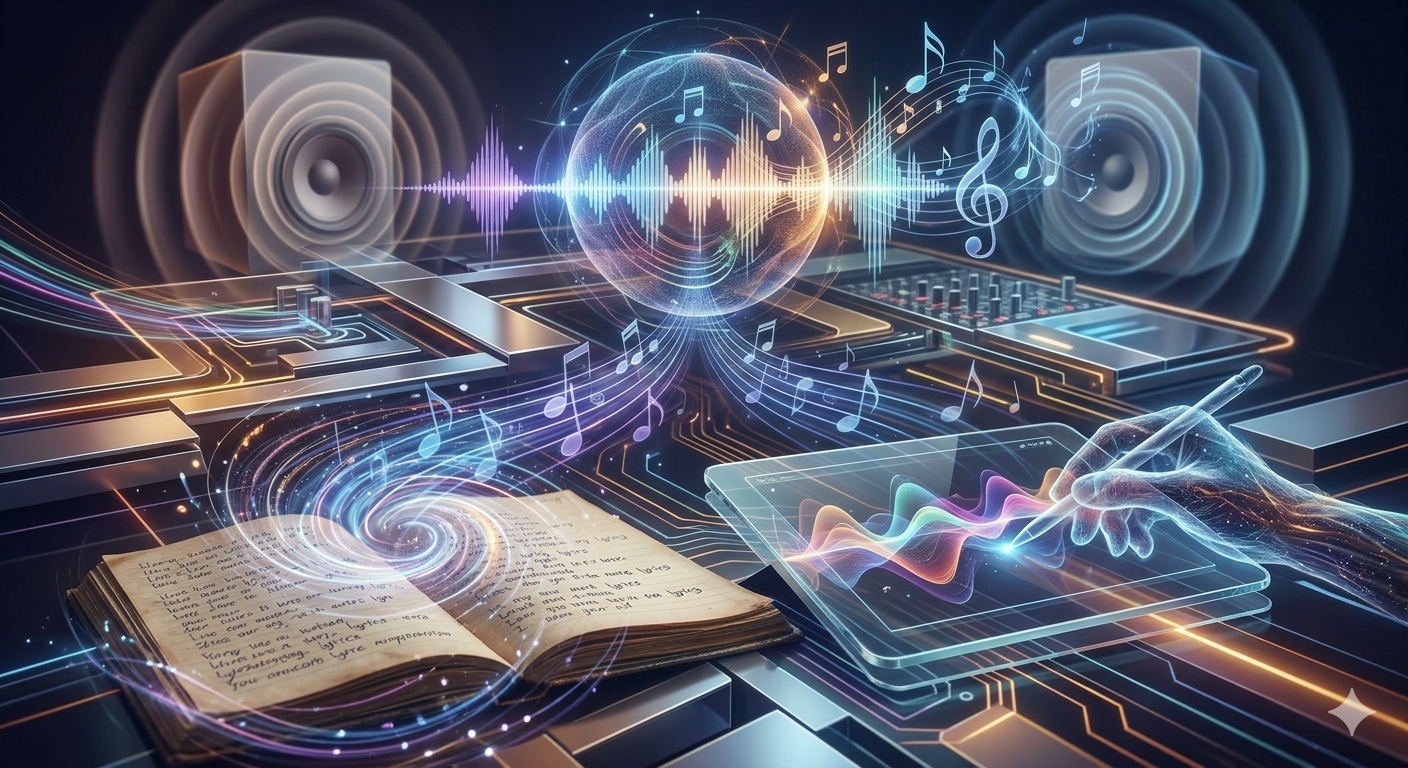
All the music on this site is original work, and the lyrics are original written works by DaividT.
However, much of the music is created using Artificial Intelligence (AI). Original compositions and recordings are noted as such where applicable.
While it is understood that AI can be a controversial topic for those in the music industry, it serves to expedite the creation process to bring original concepts into realisation, The following reflects on how AI is reshaping music creation, fostering innovation, and helping independent creators to efficiently and effectively bring their unique, handwritten lyrics and musical visions to life. A section follows on the topic of Why AI Will Never Replace the Magic of Live Performance.
From Concept to Composition: How AI Empowers Original Music Creation
The intersection of technology and art has always sparked debate, and the rise of Artificial Intelligence in music is no exception. For traditionalists, the technology can feel like a disruption. However, for modern creators, AI is not a replacement for human artistry—it is a powerful catalyst. On this platform, every piece of music you hear is a completely original work. The foundation begins with authentic, human-written lyrics and distinct concepts. AI then steps in as the ultimate collaborative tool, turning those written words and creative visions into fully realised auditory experiences.
Here is a look at how AI is reshaping music creation, fostering innovation, and helping independent creators bring their original concepts to life faster than ever before.
Accelerating the Journey from Idea to Finished Track
The traditional music production pipeline is notoriously long and resource-intensive. Writing a song is just the first step; producers must then arrange the piece, hire musicians or program virtual instruments, record, mix, and master the track. This process can take weeks, months, or even years, often stalling creative momentum.
AI radically expedites this creation process. By utilising advanced generation tools, a songwriter can input their original lyrics, define a structural direction, and hear a fully orchestrated track materialize in minutes. This rapid turnaround allows creators to experiment with different genres, tempos, and arrangements on the fly. It transforms music creation from a slow, bureaucratic process into an agile, fluid form of expression.
Lowering the Barriers to Sonic Expression
Not every brilliant lyricist is a trained multi-instrumentalist or a master audio engineer. Historically, incredible concepts remained trapped in notebooks simply because the writer lacked the technical production skills or the financial backing to hire a studio team.
AI bridges this gap, democratizing the production process. It acts as an accessible, on-demand backing band and production suite. By handling the complex technicalities of synthesis and instrumentation, the technology ensures that anyone with a powerful message and an original concept can share their music with the world, regardless of their technical background or budget.
Preserving Artistic Core: Lyrics and Original Concepts
A common misconception is that AI-generated music lacks soul or human connection. However, the emotional core of any song remains the storytelling. On this site, the human element is never lost because the lyrics and core concepts are entirely original, written works.
AI does not replace the human heart behind the song; it serves the text. It acts as a mirror to the writer’s intent, translating the emotional cadence of written words into matching musical landscapes. The creator remains the director, guiding the AI to find the perfect sonic environment that elevates the original poetry.
A Powerful Tool for the Modern Independent Creator
While discussions surrounding AI in the music industry will undoubtedly continue, its practical benefits for independent creators are undeniable. It strips away the logistical friction of production, allowing artists to focus on what matters most: conceptualisation, storytelling, and creative direction. By serving as an efficiency engine, AI helps turn imagination into reality, ensuring that original words are never left without a melody.
Why AI Will Never Replace the Magic of Live Performance
The rise of AI in music production has sparked an intense debate about the future of creativity. AI can now compose intricate melodies, generate studio-quality instrumentation, and help independent artists bring original concepts to life at unprecedented speeds. Yet, despite its rapid evolution, there is one sacred boundary the technology will never truly cross: the live performance.
While AI excels at creating flawless, predictable digital tracks, it cannot replicate the raw, unpredictable essence of a live show. In fact, the very reason AI will never replace live musicians is rooted in the defining feature of human artistry: the unique imperfections of every performance.
The Beauty of the Unpredictable
Studio recordings—whether mixed by a human or generated by an algorithm—are engineered for perfection. They offer a controlled, repeatable experience. Live performance is the exact opposite. It is a high-wire act where anything can happen.
A guitarist might hit a chord with a fraction more force because of the energy in the room. A singer might hold a note a second longer, letting their voice break slightly under the weight of the emotion. A drummer might intuitively push the tempo during a climatic chorus. These are not mistakes; they are choices. They are spontaneous, fleeting moments that happen once and can never be perfectly replicated. AI operates on data, patterns, and logic—it cannot authentically simulate the spontaneous urge to break its own rules in the heat of a moment.
The Feedback Loop of Human Energy
A live performance is never a one-way broadcast; it is a dynamic conversation between the artist and the audience. This feedback loop is fueled by empathy, shared space, and collective emotion.
Musicians on stage read the room. They feel the tension, the excitement, or the stillness of the crowd and adjust their performance in real-time. If an audience is electric, the band plays with more intensity. If the room is intimate, they dial it back. This fluid, emotional exchange requires human consciousness. An AI-driven performance might be technically flawless, but it cannot “feel” a room or alter its delivery based on shared human connection.
Vulnerability and Imperfection as a Connection Point
Audiences do not flock to live venues to witness perfection; they go to witness vulnerability. Watching a human being push their physical and emotional limits on a stage is inherently compelling.
When a performer hits a difficult note or navigates a complex rhythm, the audience feels the stakes. The minor imperfections—the slight breathiness in a vocal line, the scratch of fingers moving across guitar strings, the raw resonance of an acoustic instrument—are the exact elements that make the music feel alive. They remind us that the person on stage is human, just like the people in the crowd. AI, by its very nature, lacks vulnerability. A machine cannot risk failing on stage, and without the risk of failure, triumph loses its meaning.
The Irreplaceable Human Element
As AI becomes a standard tool in the songwriting and production process, live music will only grow in value. It will stand as the ultimate marker of authenticity. Technology can expedite the creation of an original concept and help shape a brilliant track in the studio, but the stage remains a uniquely human sanctuary.
Live music is a celebration of the present moment, bound together by the beautiful, messy, and glorious imperfections of human expression—something a line of code can never replace.